Women in maritime
Building a more inclusive industry at sea
For decades, the sea has been seen as a male-dominated world.
Today, women still account for only around two per cent of the world’s more than one and a half million seafarers. At the same time, the industry recognises that without their participation, it cannot build a modern and competitive maritime economy.
At Stena Line, we work to increase the proportion of women at all levels of our organisation. In less than five years, the number of women in management positions has almost doubled. Our ambition is to reach at least 30 per cent female leaders – from vessels and ports to senior management.
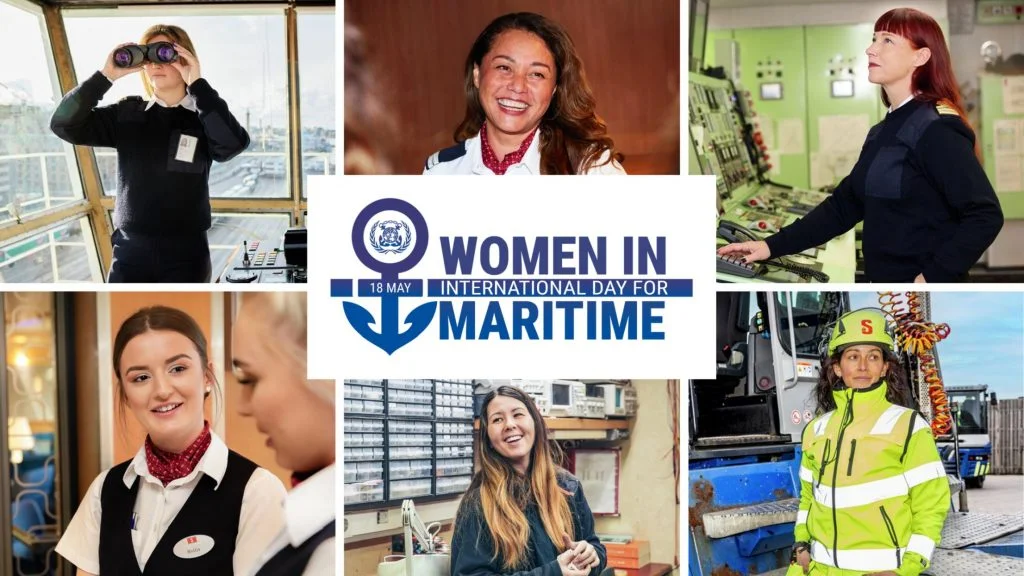
The change is not only statistical, but also symbolic. In 2022, Captain Lynette Bryson became our first female captain – showing that the bridge is not reserved for one gender. We have also signed the Women in Maritime Pledge, committing to removing barriers to recruitment and career development, and to creating a more inclusive working environment.
In the Baltic Sea the presence of women is clearly visible. They currently make up around 30 per cent of the total workforce on board of our vessels operating between Gdynia and Karlskrona, including those employed in hotel and catering services. Importantly, an increasing number of female cadets are applying, including in the engine department.
But what does this development look like in practice?
We spoke to Agata Szynkiewicz, Fleet Crewing Manager, who leads the crew department for our vessels in the Baltic Sea.
For Agata Szynkiewicz, the development is clear.
“Women at sea are neither an exception nor a curiosity, but a natural part of crews, management structures and the future of the industry,” she says.
She points out that while the maritime world has long been seen as male-dominated, this perception is changing, both culturally and practically.
“Without the active participation of women, the shipping industry cannot build a modern and competitive maritime economy.”
Technological development has also played a role in making maritime careers more accessible. Many tasks on board are becoming less physically demanding and more inclusive. That opens up opportunities for more people to see a future at sea.
Working conditions have evolved as well. The shift system – typically two weeks on board followed by two weeks at home – helps create a better balance between work and private life. “This is important not only for women, but for everyone. Being able to combine a maritime career with family life makes a real difference.”
Connectivity has improved, making it easier to stay in touch with loved ones during time at sea. At the same time, shorter rotations help reduce one of the most challenging aspects of the job, long periods away from home.
For Agata, inclusion is not only about fairness – it is also about performance.
At Stena Line, this is reflected in our sustainability strategy, with clear focus areas such as equal opportunities, anti-bullying policies and leadership development programmes.
“Diverse teams are more innovative and better at understanding our customers. That benefits the whole business.”
Looking ahead, she sees continued progress as essential for the industry.
“The sooner the shipping industry taps into the full potential of talent, regardless of gender, the stronger and more resilient the European maritime economy will be.”