Company news
The agreement was signed during a press conference at the Port of Trelleborg by Elisabeth Lönne, Chief Commercial Officer at Stena Line, and Roberto Maiorana, Director-General of the Swedish Transport Administration. Attending the press conference were also Swedens Minister of Infrastructure and Housing, Andreas Carlsson and Brigadier-General Johan Elofsson from the Swedish Armed Forces.
“Stena Line is very pleased that the conditions are now in place for our operation on the Trelleborg–Rostock route to continue. We view our role in the transport system in general, and in the vital rail connection to continental Europe provided by our ferries in particular, with both pride and great responsibility,” says Elisabeth Lönne.
“I am pleased and proud that we have reached this agreement. This has been a priority for us, and we are now securing rail ferry services between Sweden and Germany for the years ahead,” says Roberto Maiorana, Director-General of the Swedish Transport Administration.
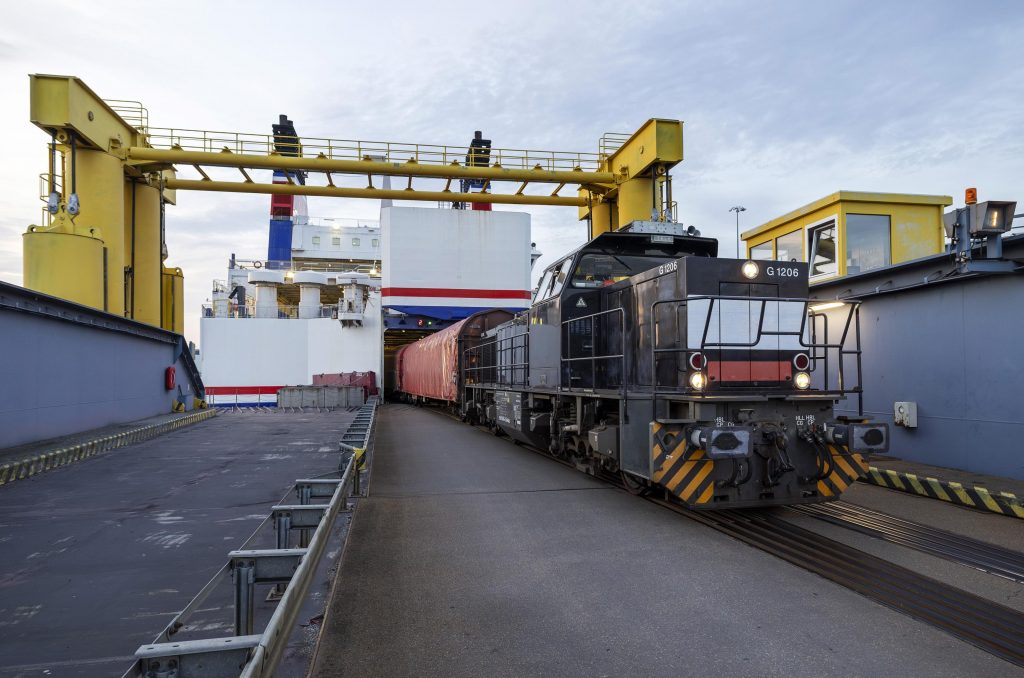
Stena Line has operated the Trelleborg–Rostock route with the two rail ferries M/S Skåne and M/S Mecklenburg-Vorpommern since 1998. Today, it is Sweden’s only regular rail ferry service and one of only a limited number of rail ferry operations worldwide.
Strengthening Sweden’s transport system and national defence capability
In a deteriorating security environment, transport infrastructure plays a crucial role. The continued operation of Stena Line’s rail ferries enables ongoing military mobility for both the Swedish Armed Forces and NATO, while ensuring Sweden’s ability to provide and receive Host Nation Support.
“Through rail ferry services, we can maintain NATO’s fundamental requirement for a robust transport system that supports national resilience. The transport system must function in peacetime, crisis and war – both for domestic traffic and for transport to and from Sweden,” says Roberto Maiorana.
Germany is Sweden’s largest trading partner, and the rail ferries enable transports that cannot pass via the Öresund route due to weight and width restrictions on Danish and German rail infrastructure. As the Öresund Bridge is the only fixed railway connection to continental Europe, the rail ferries also serve as a strategic backup solution in the event of prolonged disruptions.
“For many years, this route has formed an important part of Sweden’s exports to and imports from one of our most important trading partners, Germany, where the ability to transport freight by rail plays a crucial role,” concludes Elisabeth Lönne of Stena Line.